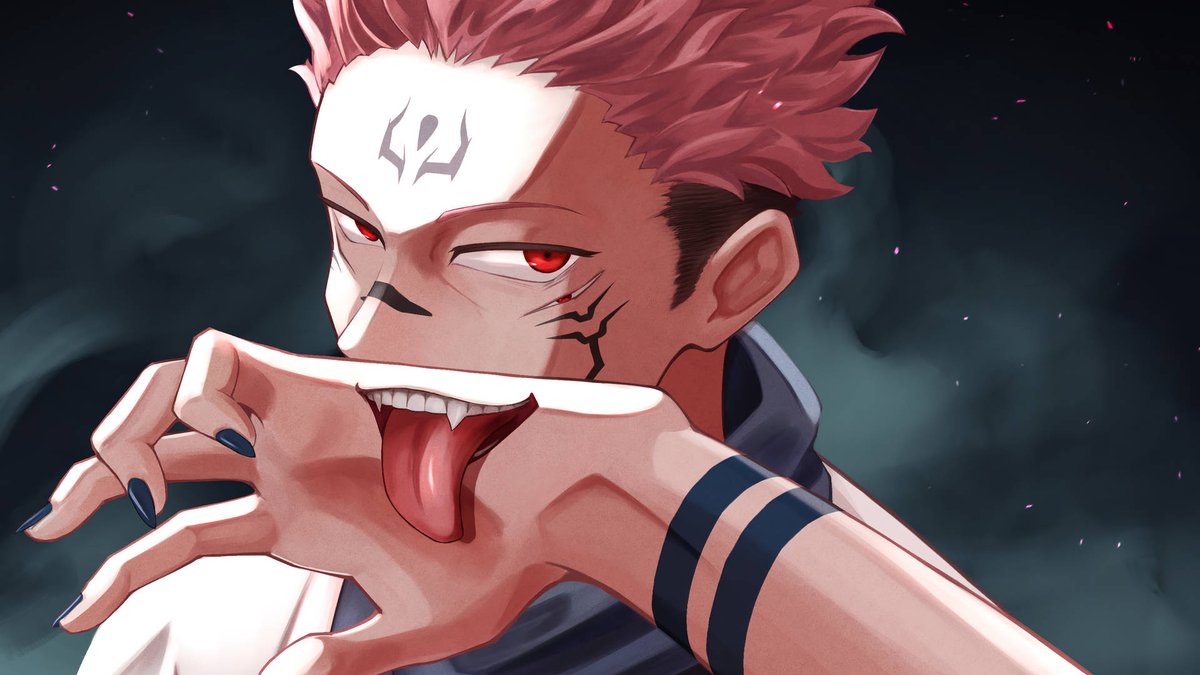
Are you diving into the wild, genre-bending world of Dandadan and wondering if Sukuna, the formidable King of Curses from Jujutsu Kaisen, makes a mysterious appearance? It’s a common query given both series' popularity and their thrilling supernatural elements. However, let's clarify right from the start: Sukuna is a core antagonist in Jujutsu Kaisen and does not appear in Yukinobu Tatsu’s Dandadan.
While Dandadan features its own roster of terrifying spirits, eccentric aliens, and protagonists imbued with incredible powers, the "mysterious role" alluded to in the series title isn't a crossover character. Instead, Dandadan unveils a profound, mind-bending mystery inherent to its very name: "the Dandadan" itself. This central enigma is far more intricate and universe-defining than any guest appearance could be.
Unveiling "The Dandadan": More Than Just a Title
For many chapters, the title of Yukinobu Tatsu's manga remained a quirky, nonsensical phrase, hinting at the series' unique blend of horror and comedy. Then, in a pivotal moment in Chapter 163, the antagonist Count Saint-Germain, an enigmatic collector of paranormal artifacts, dropped a bombshell: his ultimate goal is to obtain "the Dandadan." This isn't just a word; it's a profound, tangible concept within the Dandadan universe.
This revelation completely recontextualized the series, shifting from a collection of strange encounters to a focused quest for a singular, universe-altering entity. Accompanied by the visual of the Womb Realm mandala from Esoteric Buddhism, "the Dandadan" is depicted as something immense, powerful, and central to all existence.
Diving Deeper into the Womb Realm Mandala and its Significance
The imagery associated with "the Dandadan" directly references the Womb Realm mandala, or Garbhadhatu Mandala. Originating from the Mahāvairocana Tantra, a foundational Buddhist text, this mandala is a cosmic diagram representing the universe as seen from the perspective of the Mahavairocana Buddha. At its heart lies an eight-petaled lotus, with the Mahavairocana Buddha surrounded by four other Buddhas and four Bodhisattvas.
For practitioners, this mandala is a tool for meditation, fostering compassion, wisdom, and enlightenment, ultimately aiming to escape the cycle of rebirth (samsara). This mirrors Count Saint-Germain's grand ambition to understand and collect all the world's mysteries, suggesting "the Dandadan" holds the key to ultimate knowledge or control over reality itself. For a full breakdown of Dandadan's intricate lore and its narrative journey, explore our in-depth guide on .
The Linguistic Clues: What Does "Dandadan" Truly Mean?
Beyond its esoteric Buddhist connections, the title "Dandadan" also has a clever linguistic foundation. The Japanese suffix "dan" (談) translates to "story" or "tale," and it frequently appears in words related to the supernatural or unusual. Think of kaidan (ghost story), kidan (strange story), or taiken-dan (story of one's experience).
The manga itself subtly hinted at this wordplay, with these specific "dan" words appearing on the cover of Japanese Volume 3. This dual meaning beautifully encapsulates Dandadan's essence: a wild, chaotic, and often hilarious collection of strange and paranormal stories, all converging on one ultimate, world-shaping "story" or entity. And to understand how these strange tales are told through the eyes of its unforgettable protagonists, learn more about .
Fan Theories and the Future of Dandadan: Is It an Ultimate Power?
The reveal of "the Dandadan" has ignited a flurry of fan theories, speculating on its true nature. Is it an ultimate power capable of rewriting reality? A physical object or ancient seal preventing the spiritual and extraterrestrial worlds from merging? Or perhaps even a powerful living creature?
One compelling theory notes that the nine figures within the Womb Realm's Center Eight Petal Hall could correspond to the nine members of the main characters' evolving group. This suggests an intrinsic connection between Momo, Okarun, and their allies to this cosmic phenomenon, potentially making them key players in unlocking or defending "the Dandadan." This monumental reveal strongly suggests that Dandadan is entering its climactic final arcs, bringing its grand narrative to a head. As the manga potentially nears its climax, the excitement for its animated adaptation only grows; discover .
Separating Fact from Fan Speculation: The Absence of Sukuna in Dandadan
While it's thrilling to imagine a crossover between two such dynamic series, Sukuna, the ancient and malevolent curse user, remains firmly rooted in the world of Jujutsu Kaisen. The desire to see such powerful entities collide is understandable, but Dandadan thrives on its own unique brand of supernatural chaos, drawing from Japanese folklore, Buddhist cosmology, and original creature designs.
The confusion likely stems from both manga's shared genre of supernatural action, intense battles, and complex lore, leading some readers to wonder about potential connections. However, Dandadan's "mysterious role" is entirely self-contained, belonging to its titular enigma. To keep up with all the latest developments and ensure you don't miss any new revelations about 'the Dandadan' or other plot twists, stay updated with . Speaking of plot twists, understanding the true nature of the series' antagonists is key to grasping the grand narrative; uncover .
Instead of seeking a crossover with Sukuna, the true mystery to unravel in Dandadan is far more fundamental to its universe. It’s the journey to understand what "the Dandadan" truly is, how it shapes the world of Momo and Okarun, and what ultimate power or knowledge it holds. This original, captivating enigma promises an exhilarating ride unlike any other.